

The global demand for caffeine pouches is growing rapidly as consumers look for convenient, smoke-free and tobacco-free energy alternatives. Popular in markets such as the United States, Sweden, Germany, United Kingdom, India and Canada, caffeine pouches are becoming a fast-growing segment in the functional pouch industry.
For companies planning to enter this market, understanding the caffeine pouch manufacturing process is essential. From ingredient preparation to pouch filling and final packaging, every stage of production must follow strict quality standards to ensure consistent flavor, precise dosage and safe consumption.
In this blog, we explain the caffeine pouch manufacturing process step-by-step, helping manufacturers understand how modern production lines operate and what equipment is required for efficient large-scale production.
What Are Caffeine Pouches?
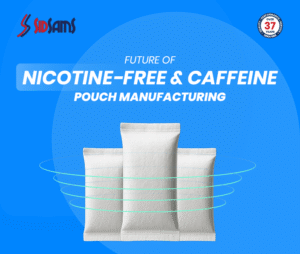
Caffeine pouches are small, smokeless oral pouches that contain caffeine along with flavoring agents and plant-based fillers. Unlike traditional energy products such as drinks or pills, caffeine pouches are placed under the lip and gradually release caffeine over time.
Key characteristics of caffeine pouches include:
- Tobacco-free formula
- Controlled caffeine dosage
- Flavored varieties such as mint, citrus, berry and many more
- Discreet and portable consumption
- Growing popularity among energy product consumers
Because of their convenience and innovative delivery system, caffeine pouches are gaining strong traction in international markets.
Step-by-Step Caffeine Pouch Manufacturing Process
1. Raw Material Selection and Preparation
The first stage of caffeine pouch manufacturing involves selecting high-quality ingredients that ensure safety, consistency, and proper flavor delivery. The main raw materials used in caffeine pouch production typically include:
- Pharmaceutical-grade caffeine powder
- Plant-based fillers such as cellulose fiber
- Natural or artificial flavoring agents
- Sweeteners
- Stabilizers and moisture regulators
These ingredients must meet strict quality standards, especially for international markets where regulatory compliance is critical.
Once the ingredients are selected, they are carefully weighed and prepared according to the required formulation.
2. Ingredient Mixing and Blending
After preparation, the ingredients are transferred to industrial mixing equipment where they are blended to create a uniform caffeine pouch mixture.
The mixing stage is extremely important because it ensures:
- Even distribution of caffeine
- Consistent flavor intensity
- Proper texture and moisture balance
Advanced mixing systems allow manufacturers to control ingredient ratios precisely, ensuring that every pouch delivers the same caffeine dosage and taste experience.
Uniform mixing also prevents product inconsistencies that could affect consumer satisfaction or regulatory compliance.
3. Pouch Material Preparation
Caffeine pouches use specialized non-woven pouch material designed to hold the powder mixture while allowing the active ingredients to be released gradually during use.
This material must meet several important requirements:
- Food-grade safety standards
- Breathable structure for ingredient release
- High durability to prevent tearing
- Consistent pouch shape and size
The pouch material is supplied in rolls and fed into the pouch-forming section of the manufacturing line.
4. Pouch Forming and Filling
Once the mixture and pouch material are prepared, the production line proceeds to the pouch-forming and filling stage.
At this stage:
- The pouch material is formed into small pocket-shaped pouches.
- The caffeine mixture is precisely dosed into each pouch.
- The pouch is sealed to hold the contents securely.
High-precision filling systems are essential to ensure that each pouch contains the correct amount of caffeine mixture.
Advanced machines can perform this process at high speed while maintaining accurate dosage and consistent pouch shape.
5. Pouch Sealing and Quality Control
After filling, the pouches are sealed using specialized sealing technology to ensure that the product remains intact during handling and transportation.
During this stage, manufacturers conduct quality control checks, including:
- Pouch weight verification
- Seal integrity inspection
- Visual quality checks
- Product consistency testing
Quality assurance is especially important for export markets where packaging reliability and dosage accuracy must meet international standards.
6. Pouch Drying and Conditioning
In some production setups, the pouches may go through a conditioning or drying phase to stabilize moisture levels and ensure long shelf life.
This process helps:
- Maintain product freshness
- Improve texture consistency
- Prevent moisture-related issues during storage
Proper conditioning ensures that the final product maintains its quality throughout distribution and retail storage.
7. Can Filling and Final Packaging
After the pouches are prepared, they are transferred to the final packaging stage where they are placed into containers such as cans or tins.
The packaging stage typically includes:
- Automatic pouch counting
- Can filling
- Lid sealing
- Labeling and coding
- Carton packaging for shipping
Efficient packaging ensures that the product is protected during transportation while maintaining a professional retail appearance.
Machinery Used in Caffeine Pouch Manufacturing
Modern caffeine pouch production relies on advanced machinery to achieve consistent quality and high production output. Key equipment used in the process includes:
- Industrial ingredient mixers
- Automatic pouch forming machines
- Precision filling systems
- Pouch sealing machines
- Can filling and labeling machines
Manufacturers looking to scale their production often invest in automated solutions that integrate these processes into a continuous production line.
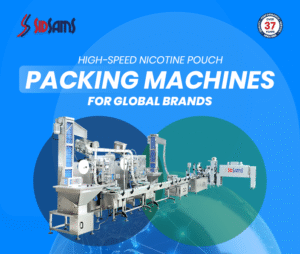
SidSam Group specializes in manufacturing advanced pouch packing machines designed for high-speed production and global packaging standards.
Advantages of Automated Caffeine Pouch Production
Automation plays a critical role in modern caffeine pouch manufacturing. By using automated machinery, manufacturers can achieve several important advantages.
Higher Production Efficiency – Automated machines can produce thousands of pouches per hour, significantly increasing production capacity.
Consistent Product Quality – Precision filling systems ensure uniform pouch weight and caffeine dosage across every batch.
Reduced Labor Costs – Automation reduces the need for manual handling and improves overall operational efficiency.
Improved Hygiene and Safety – Automated production minimizes human contact with ingredients, improving hygiene standards.
Scalability for Global Markets – Automated lines allow manufacturers to increase production quickly to meet growing international demand.
Why the Caffeine Pouch Market Is Growing Globally
The caffeine pouch industry is expanding rapidly due to several key market trends:
- Increasing demand for smoke-free products
- Growing interest in convenient energy supplements
- Expansion of nicotine-free pouch products
- Rising popularity among younger consumers
- Global growth of functional consumer products
As a result, many companies are investing in caffeine pouch production lines to enter this fast-growing market segment.
Choosing the Right Manufacturing Equipment
For companies planning to manufacture caffeine pouches, selecting the right machinery partner is crucial.
A reliable equipment manufacturer can help ensure:
- Efficient production setup
- Consistent product quality
- Scalable production capacity
- Long-term machine reliability
SidSam Group provides advanced pouch packing solutions designed to support modern pouch manufacturing operations. Our machines are built with precision engineering, durable components and automation technologies that help manufacturers achieve high production efficiency and consistent packaging performance.
Conclusion
Caffeine pouch manufacturing process involves several carefully controlled steps, from ingredient preparation and mixing to pouch filling, sealing and final packaging. Each stage plays a vital role in ensuring product quality, safety and consistency.
As global demand for caffeine pouches continues to grow, manufacturers must adopt efficient production methods and reliable packaging technologies to remain competitive. By investing in advanced automation and working with experienced machinery manufacturers, companies can successfully scale their production and meet the needs of international markets.
Understanding the complete caffeine pouch manufacturing process is the first step toward building a successful production operation in this rapidly expanding industry.