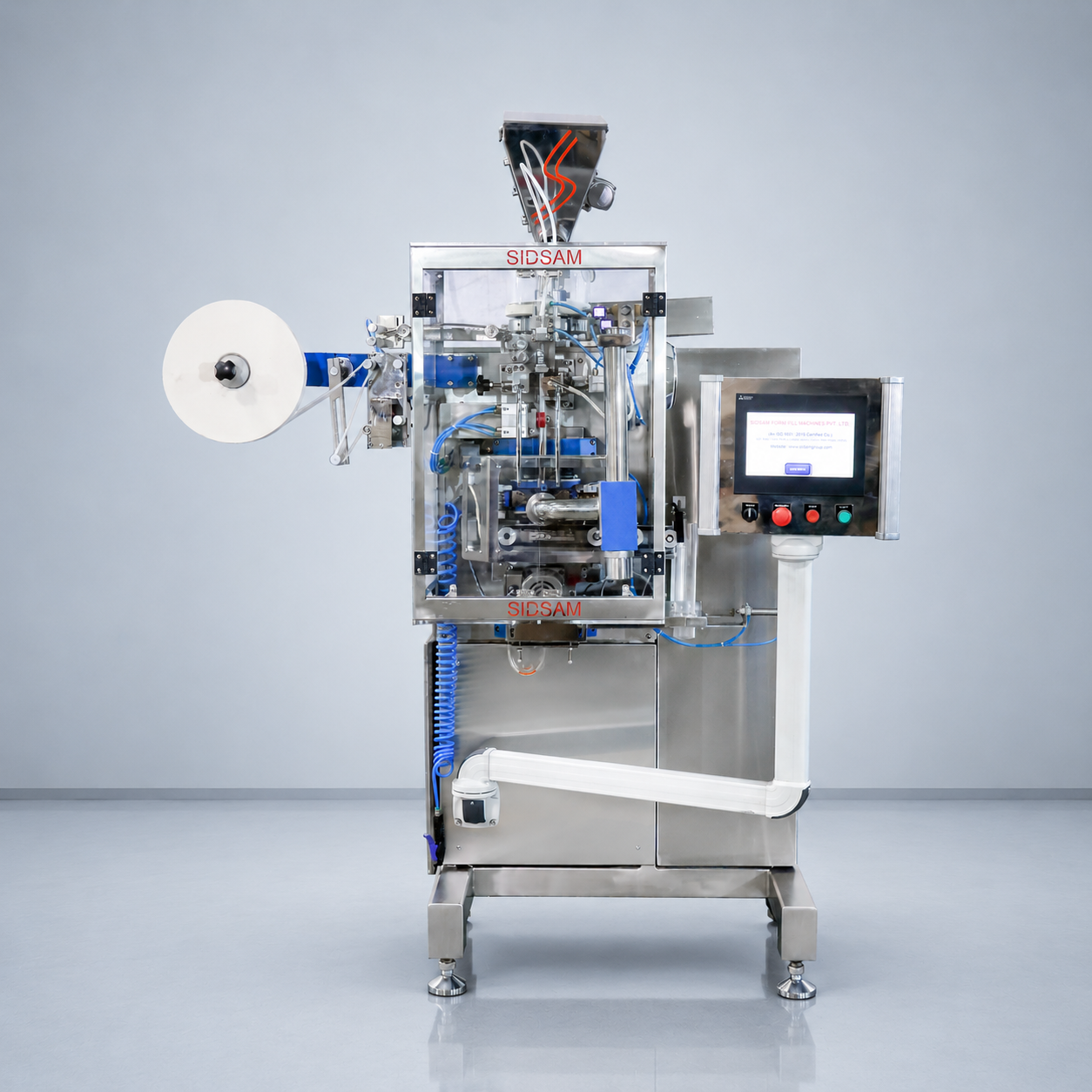
A snus packing machine converts prepared snus, nicotine, caffeine or other oral-pouch material into accurately dosed, consistently sealed portions. For manufacturers planning a dependable line, understanding every stage—from feeding and dosing to non-woven pouch formation and discharge—helps define the right equipment, realistic output and quality-control plan.
How a snus packing machine works
The process begins with a stable, properly conditioned product. Its density, moisture, particle size and flow behaviour influence hopper design, agitation and the dosing system. The machine meters a controlled quantity into the forming area, where food-contact non-woven material is shaped around the dose. The pouch is then sealed, separated and discharged for inspection or downstream can filling.
Modern snus packing and packaging machines can be configured for different pouch dimensions, target weights and production capacities. Mechanical, servo-driven and multilane configurations each suit different operating priorities. The correct choice depends on sustained output, product behaviour, changeover frequency, available floor space and the required level of automation.
Dosing accuracy and pouch formation
Accurate dosing protects product consistency and reduces giveaway. Representative production material should therefore be tested before final machine configuration. During trials, manufacturers should review average fill weight, variation, product loss and the system's response to normal changes in bulk density.
Material tension and tracking must remain stable while the web is formed. Poor control can produce uneven pouch dimensions, wrinkles or misplaced seams. A well-designed oral pouch packing machine coordinates feeding, dosing, material transport and sealing as one process rather than treating them as isolated components.
Sealing and quality verification
Seal quality depends on compatible pouch material, correct energy or temperature settings, pressure and contact time. Ultrasonic sealing is commonly considered for oral-pouch applications because it can produce controlled seams without relying on conventional thermal sealing alone. Final suitability must be confirmed with the actual material and product.
Acceptance trials should examine fill-weight consistency, seal integrity, pouch appearance, reject percentage and stable running speed. Sampling should cover start-up, steady production and normal interruptions. Clear acceptance criteria agreed before manufacture make commissioning faster and reduce uncertainty.
Single-lane, multilane and integrated lines
A single-lane machine can suit flexible production, product development or moderate capacities. Multilane systems increase output where demand and downstream handling justify the additional complexity. Review SidSam's single-lane mechanical Snus machine and multilane Snus packing machine when comparing configurations.
The pouch machine may also connect with counting, conveying, check-weighing, metal detection, can handling, labelling and secondary packaging. Manufacturers seeking complete automation can evaluate an automatic Snus and nicotine pouch packing plant for cans.
Maintenance and long-term performance
Routine cleaning, calibration and wear-part inspection protect output quality. Operators should understand alarms, recipe settings, correct material threading and validated changeover procedures. Hygienic access, documented preventive maintenance and a practical spare-parts plan are as important as nominal machine speed.
Discuss your application with SidSam
SidSam Group engineers pouch machinery and integrated packing lines for manufacturers in India, the USA, Europe and other international markets. To receive a relevant proposal, share your product, pouch dimensions, target fill weight, packaging material, required capacity and downstream packing format. Explore the primary snus packing machine manufacturer page or contact SidSam Group for an application review.